
Algorithmacy, Luck and the Invisible Structures Beneath Reality
We move through these systems every day, sensing patterns we cannot fully see. Perhaps this is why people so often describe successful individuals as having “good instincts” or “a feel for things.”
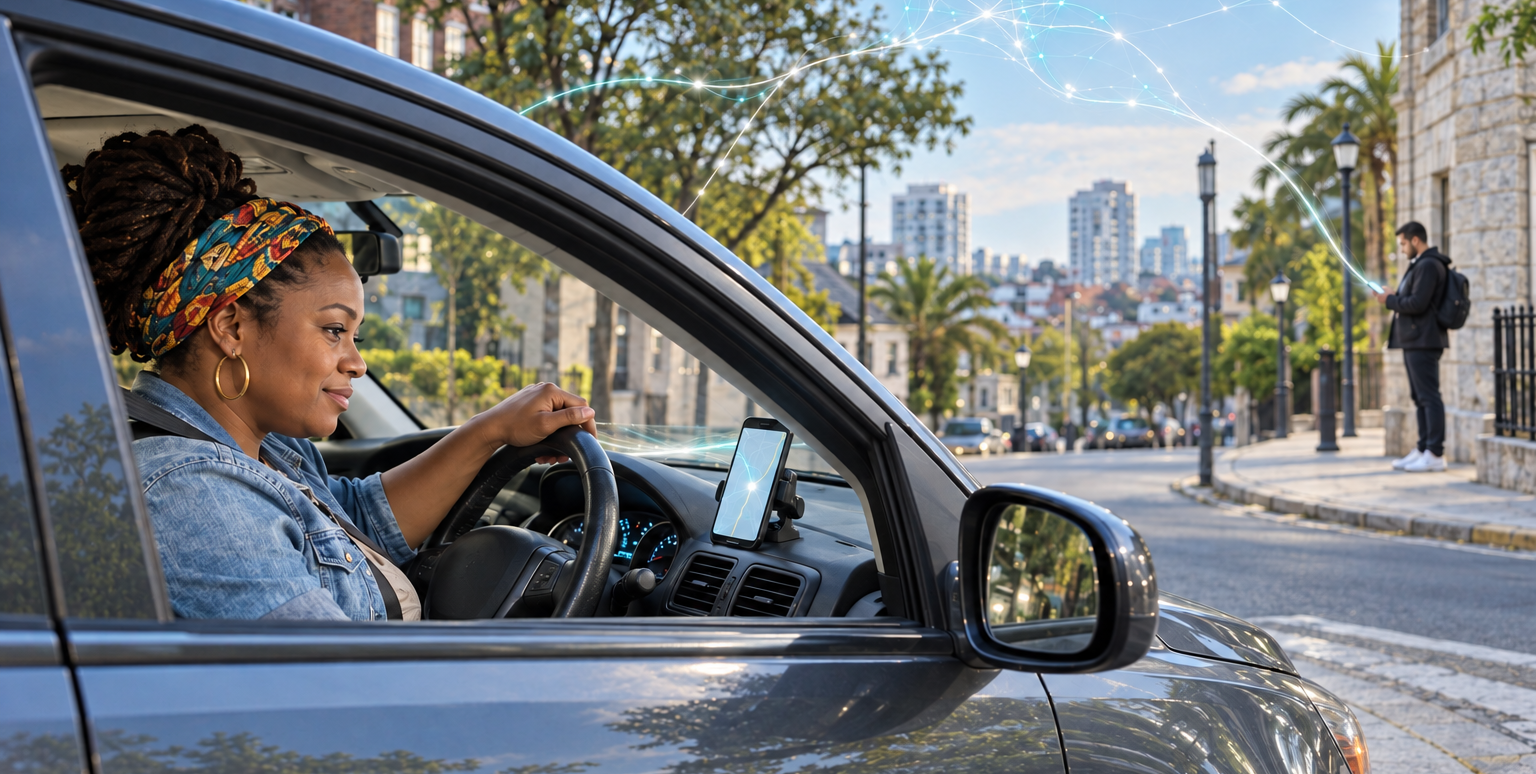
Roger Hunt’s Substack - The Algorithm Isn’t Talking to You - proposes a compelling idea: what we often call luck may in fact be a skill. The successful rideshare driver is not simply lucky. She has learned to coordinate with a person she cannot see through a system she does not control. Roger Hunt calls this skill algorithmacy.
The more I think about this, however, the more I find myself asking the questions:
What if algorithmacy is not entirely new? What if it is helping us see something that has always been there?
Roger’s argument is situated in the world of platforms, algorithms, and digital systems. The rideshare driver, freelancer, job applicant, and courier must all learn to navigate a third party that stands between themselves and another human being. The algorithm becomes the intermediary through which coordination occurs. But reading his article stirred my philosophical intuition.
Consider two students graduating from the same university with the same degree, similar grades, and seemingly comparable opportunities. Ten years later, one is remarkably successful while the other has achieved only moderate success.
We usually explain this difference through some combination of intelligence, effort, privilege, personality, timing, and luck. Yet “luck” feels like a placeholder word. It names an outcome without explaining the process that produced it. What exactly happened between those two lives? What signals did one perceive that the other did not? What opportunities became visible to one person and remained invisible to the other?
Roger’s theory suggests that in modern platform environments, some people develop a superior capacity to infer the needs, states, and intentions of unseen counterparts. They learn to coordinate effectively through opaque systems.
But perhaps the deeper lesson is that much of life has always involved navigating invisible systems.
Markets are invisible systems. Cultures are invisible systems. Social networks are invisible systems. Institutions are invisible systems. Even families operate through unwritten rules, expectations, and feedback loops that often remain hidden from conscious awareness.
We move through these systems every day, sensing patterns we cannot fully see.
Perhaps this is why people so often describe successful individuals as having “good instincts” or “a feel for things.” Those phrases resemble the language Roger identifies among platform workers. They are explanations we reach for when we recognize competence but cannot yet name it.
The question becomes even more intriguing when we consider attention itself.
Anyone who has ever decided to buy a particular car has experienced it. Suddenly the same model appears everywhere. It seems as though the world has changed overnight. Of course, the cars were already there - what changed was perception. The mind began assigning significance to a pattern that had previously blended into the background. Yet the consequences are real. You notice something. The noticing changes behaviour. The behaviour changes opportunities. The opportunities change outcomes.
What appears to be luck may sometimes begin as attention. And this is where my thoughts begin to drift toward metaphysics.
As human beings we have always sensed that there are structures operating beneath visible reality. Different traditions have given them different names.
Providence.
Fate.
Karma.
The Tao.
The Logos.
Divine order.
Today I’m tempted to call them algorithms.
Not algorithms in the computational sense, but in a broader sense: processes that transform inputs into outputs according to patterns we only partially understand. If so, perhaps digital algorithms are not creating an entirely new phenomenon. Perhaps they are making visible a form of coordination that has always existed.
Roger argues that algorithmacy is the ability to coordinate with a person one cannot see through a third party that imposes decisions neither controls. I wonder whether that description points beyond platforms.
Perhaps algorithmacy is also a glimpse into a more general human capacity: the ability to perceive and navigate hidden coordinating structures wherever they exist.
If that is true, then the rise of digital platforms may be teaching us something larger than how to work with apps. It may be teaching us to recognize that much of reality has always been mediated by forces we do not directly observe. Not mystical forces. Not necessarily supernatural forces. But systems, relationships, patterns, and structures that shape outcomes long before those outcomes become visible.
Perhaps what we call luck is sometimes nothing more than our ability to see the invisible structure that produced the result.
And perhaps algorithmacy is the beginning of learning how to see it.
About the Author
Lorraine Villaroel is an AI builder, transformation facilitator and community catalyst exploring the intersection of technology, education and human development. Through her writing, projects and collaborations, she examines how we can embrace emerging possibilities while cultivating the wisdom, judgment and inner growth needed to thrive in a changing world.
She writes Beyond Now at WebblyWeb, exploring who we are — and who we are becoming.